Sacred Art · The Sacred Object
A small lamp with a Christian mark
A fifth-century terracotta lamp brings Christian imagery into an object made to be filled, handled and lit.
Psalm 119:105–112 · Matthew 25:1–13
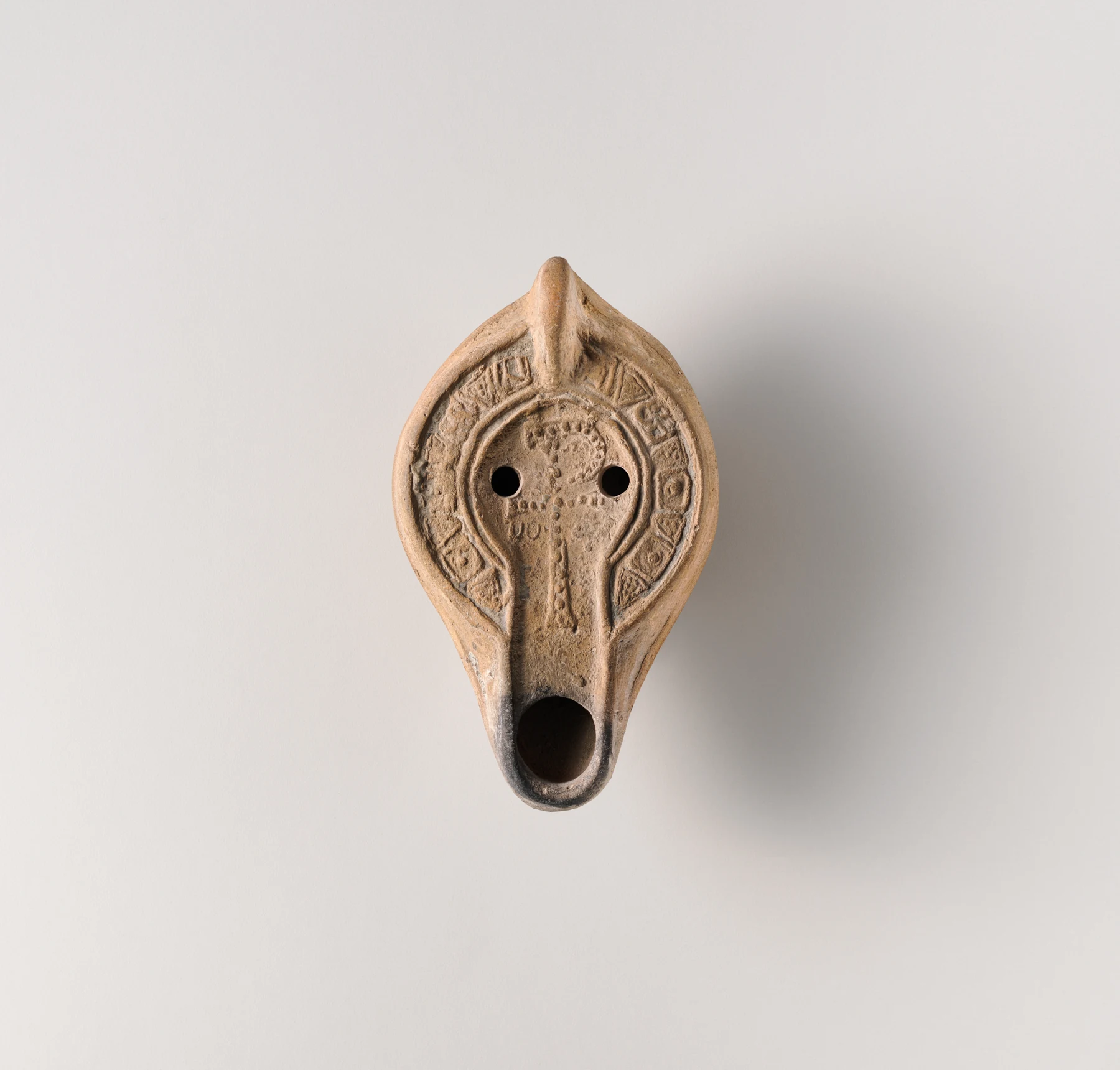
Two small holes interrupt the decorated upper surface. A larger opening sits at the projecting end, where the wick would burn. Between them, a Christian monogram forms part of the moulded decoration.
The Metropolitan Museum of Art dates this terracotta oil lamp to the fifth century CE. It identifies the central mark as a chi-rho and places the object’s manufacture somewhere in the Greek East. The catalogue relates its form and decoration to African red-slip ware lamps. Even an object this small carries evidence of forms moving between places.
The lamp is mould-made. Its raised patterns belong to an object intended to hold fuel and produce light. Seeing it in a photograph, with its flame long absent, we have to restore those practical conditions to our attention.
An object before an emblem
Religious symbols are often encountered as isolated outlines. On this lamp, the mark shares its surface with filling holes, a channel and the working end of a vessel. Its position cannot be separated entirely from the object’s use.
The point is worth taking slowly. Christian imagery here is not confined to an object whose only purpose is to be looked at. It appears on something that would need preparation and tending. The material brings repetition into the picture: fuel is consumed, a wick needs attention, darkness returns.
The museum record does not tell us the name or circumstances of an individual user. We cannot reconstruct a particular room, prayer or evening from the object alone. That limit leaves plenty to observe. Its size, openings, decoration and material are available to the eye.
Reading the lamp beside Scripture
The comparison with Psalm 119:105–112 is natural for a publication whose emblem is a lamp. There, light is attached to feet and a path. The surrounding stanza continues to speak of danger and a need for instruction.
Matthew 25:1–13 makes fuel, preparation and delay part of its parable of the waiting attendants. The objects in that scene serve a story about readiness. Neither passage establishes that this particular fifth-century lamp was made to illustrate it. The connection is ours, made through reading the object and the texts together.
That distinction protects both. Scripture does not need an invented archaeological provenance. An ancient object does not need to be assigned a particular verse to deserve close attention.
What survives
The light itself has gone. The vessel remains, with its decorated surface and the openings that made it useful. A museum photograph gives us a view its maker could never have expected, enlarged on a luminous screen.
Look once for the monogram, then again for the parts that enabled the lamp to work. The second look changes the first. The symbol belongs to a made thing, and the made thing belonged to the practical conditions of a life.
Object record: Roman terracotta oil lamp, fifth century CE. The Metropolitan Museum of Art, The Cesnola Collection, purchased by subscription, 1874–76; accession 74.51.2039. Museum record and public-domain photographs.
Read in company
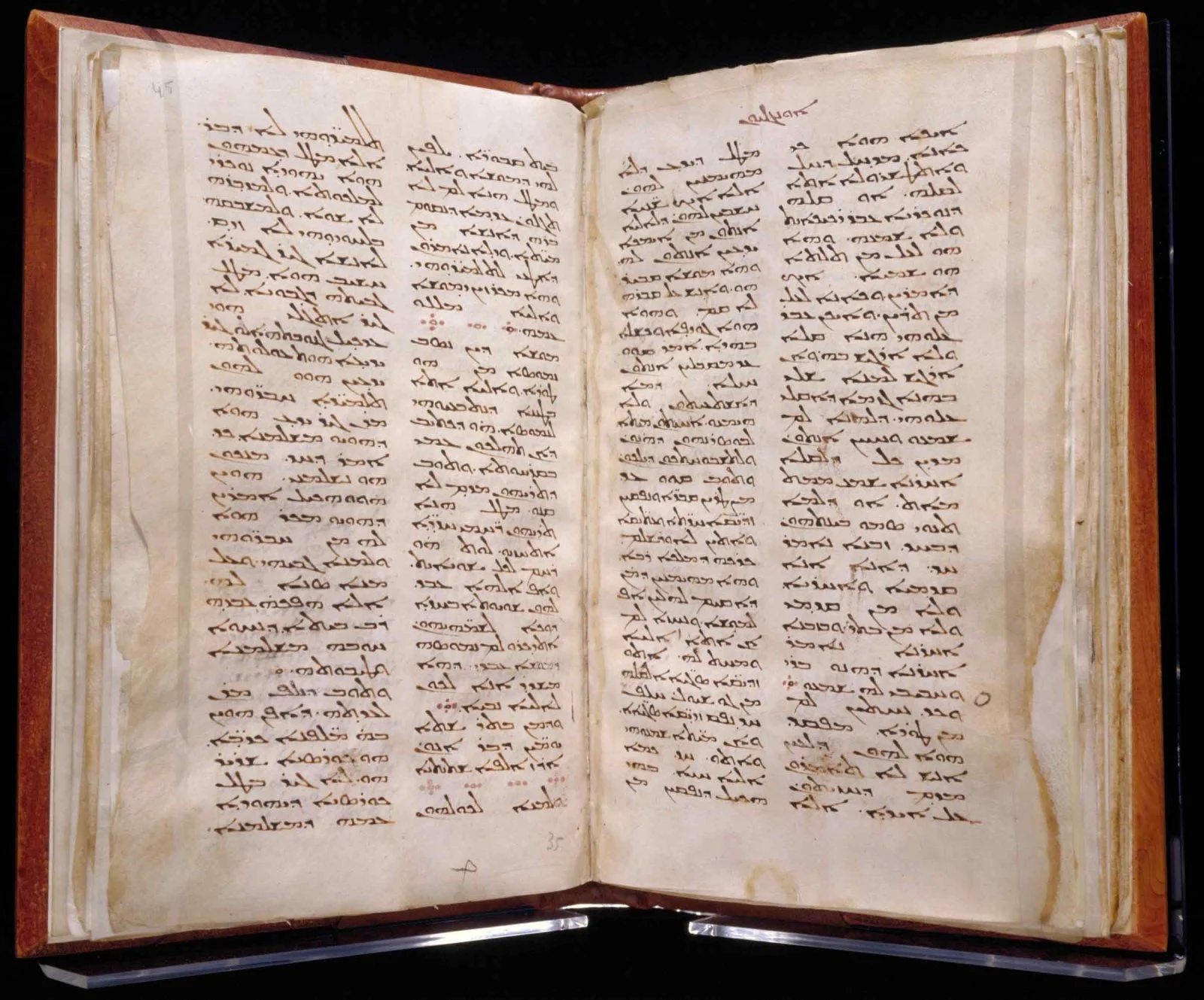
Many Tongues
A hymn can think: reading Ephrem
A pearl in the palm becomes an instrument of theological thought. An introduction to Ephrem’s Syriac poetry.
Sacred Art
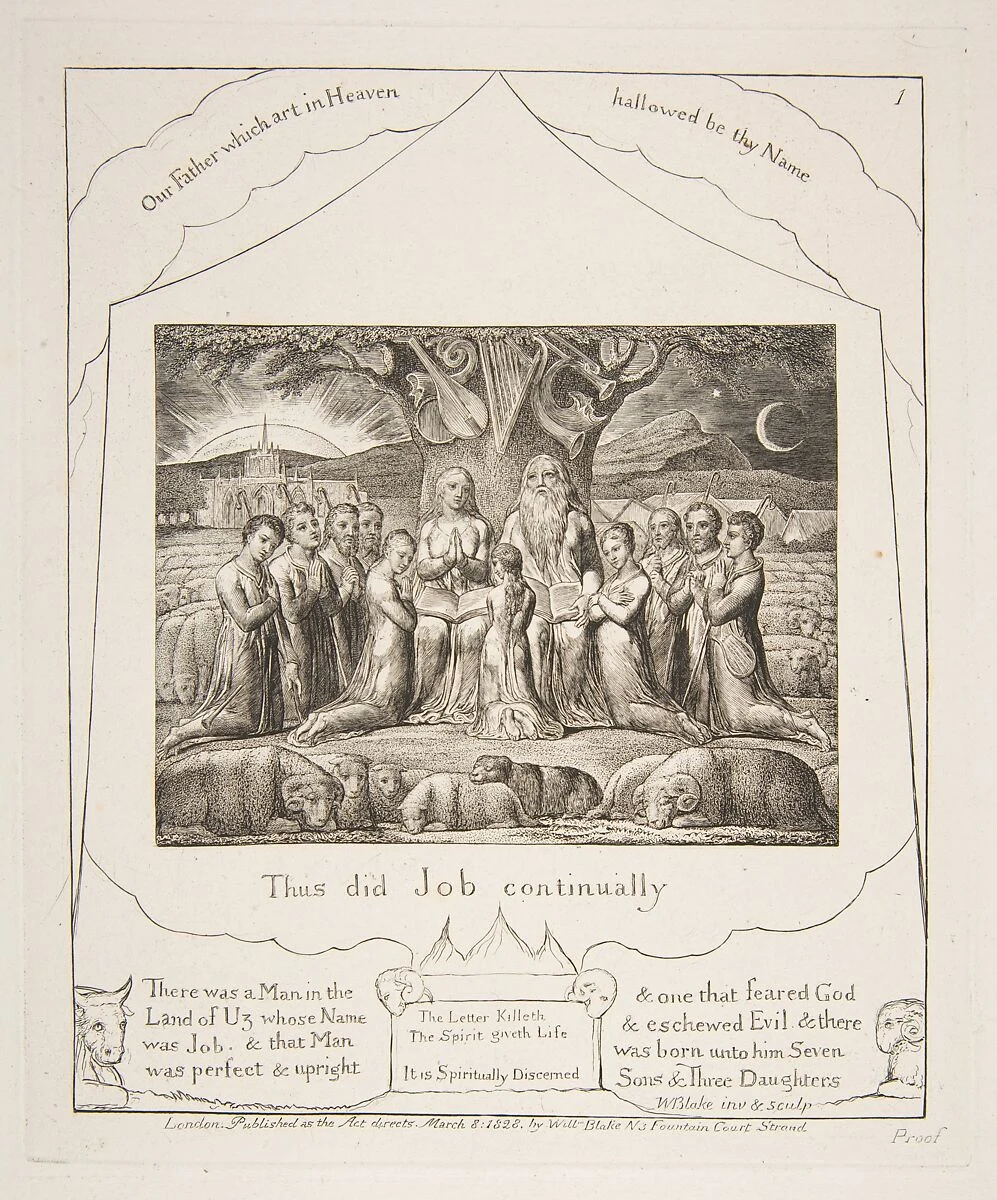
Blake’s Job, before and after
In the first image, the instruments hang in a tree. In the last, the family plays them. A small change opens a way into Blake’s biblical imagination.
Literature
George Herbert builds an altar
A poem’s shape can be part of its thought. Reading the stone, heart and sacrifice of Herbert’s ‘The Altar’.