Many Tongues · In Translation
A hymn can think: reading Ephrem
A pearl in the palm becomes an instrument of theological thought. An introduction to Ephrem’s Syriac poetry.
Matthew 13:45–46 · John 21:7–14
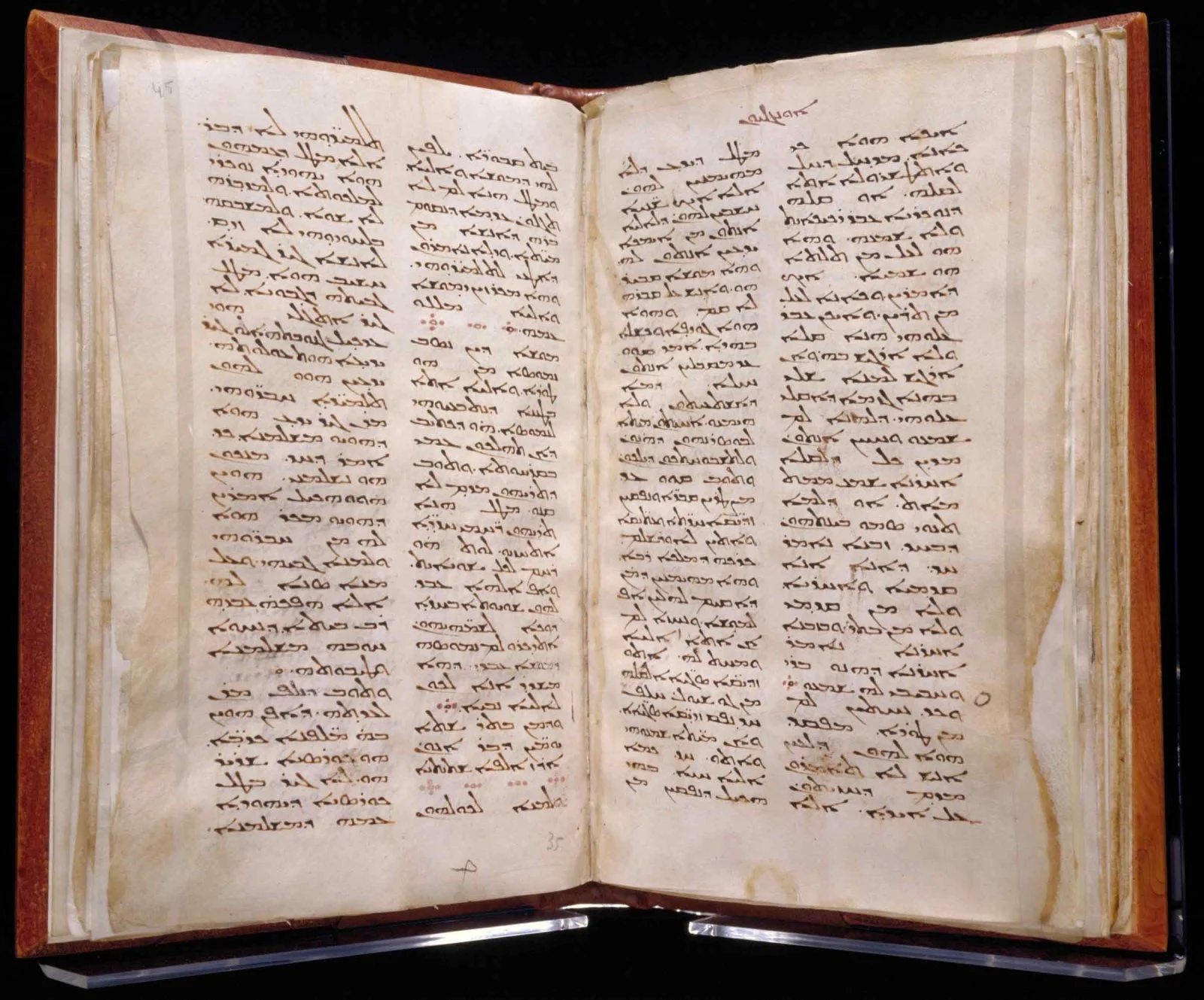
Ephrem begins with a pearl small enough to hold in his palm. He sets it there and looks closely. Its brightness, shape and material presence become occasions for thinking about Christ.
The opening of the first hymn in the collection commonly called The Pearl gives us a good place to meet him. It does not require an advance command of Syriac literature. It requires attention to an object and patience with a poem that keeps finding another relation within it.
Ephrem lived in the fourth century, approximately 306–373, and wrote in Syriac. Sebastian Brock’s guide to editions and translations is a useful starting point for the extent of that surviving work. It also helps distinguish reliable editions, older translations and questions of attribution. “Ephrem” on a title page is the beginning of bibliographical work, not its completion.
Looking becomes a method
In the first hymn, the pearl’s brilliance and unity prompt a sequence of theological comparisons. Later, the act of diving for pearls is brought into relation with the disciples. The images move between something a person might hold and the scriptural world the poet inhabits. The historical English translation makes that movement available, though its older language sometimes slows the reader down.
An English reader may initially want a key: pearl means one thing, sea means another, diver means a third. But a fixed glossary would miss the poem’s activity. A symbol can be examined from several directions. One relation becomes visible, then another. The object is kept in view while the thought develops.
This is one way poetry can reason. Its repetitions need not indicate that an argument has stopped. A return to the same image can alter the question being asked of it. Brightness concerns perception; undividedness raises a different question; the journey from sea to shore introduces another field of relations.
We are offering a reading of Ephrem’s method here, rather than claiming that every Christian tradition uses these images in the same way. The particularity is part of the interest. A Syriac writer should be read as more than a convenient illustration of ideas already familiar from elsewhere.
What translation lets us hear
Translation gives access and imposes conditions. We can follow an image in English without assuming that English reproduces the sounds, rhythm or associations of Syriac. The distance should encourage curiosity rather than prevent reading.
Brock’s bibliography identifies several translations of the hymns on the pearl, including E. G. Mathews Jr.’s rendering of Hymns on Faith 81–85. Comparing a modern scholarly translation with an older one can reveal choices that a single version conceals. A translator’s title, punctuation and preferred theological vocabulary shape the encounter.
Historical writing also needs moral scrutiny. Parts of the older collection contain polemic against other religious communities and disturbing uses of colour imagery. Those passages should be acknowledged when the work is introduced or taught. Admiration for poetic intelligence does not require adopting every judgement made by its author or translator.
Start with one hymn
Read the first hymn slowly. Keep a record of what the pearl is being compared to, and notice when the comparison changes. Resist replacing the object with an abstract conclusion too quickly.
The result is an encounter with a Christian writer for whom a poem can be an instrument of sustained attention. There is something fitting about beginning with a small object. The reader has to come close enough to look.
Text and further reading
- Ephrem, The Pearl, historical English translation, especially hymns 1 and 5. The wider text contains historical religious polemic.
- Sebastian P. Brock, St. Ephrem: A Brief Guide to the Main Editions and Translations, particularly the entries on Hymns on Faith 81–85.
Read in company
Many Tongues
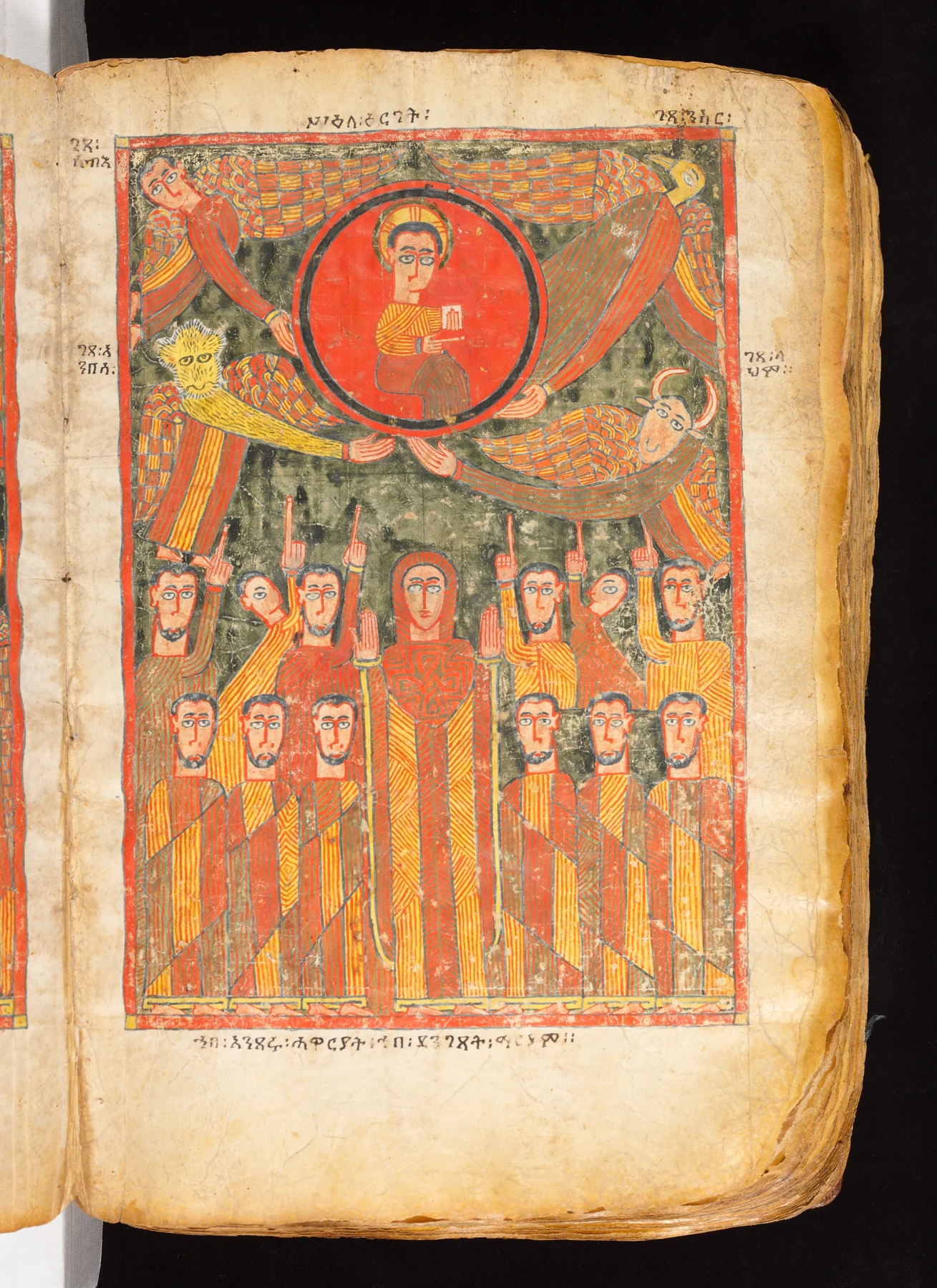
A Gospel book from the Ethiopian Highlands
An Ascension image asks to be read as part of a manuscript, a local artistic tradition and a community’s worship.
Sacred Art
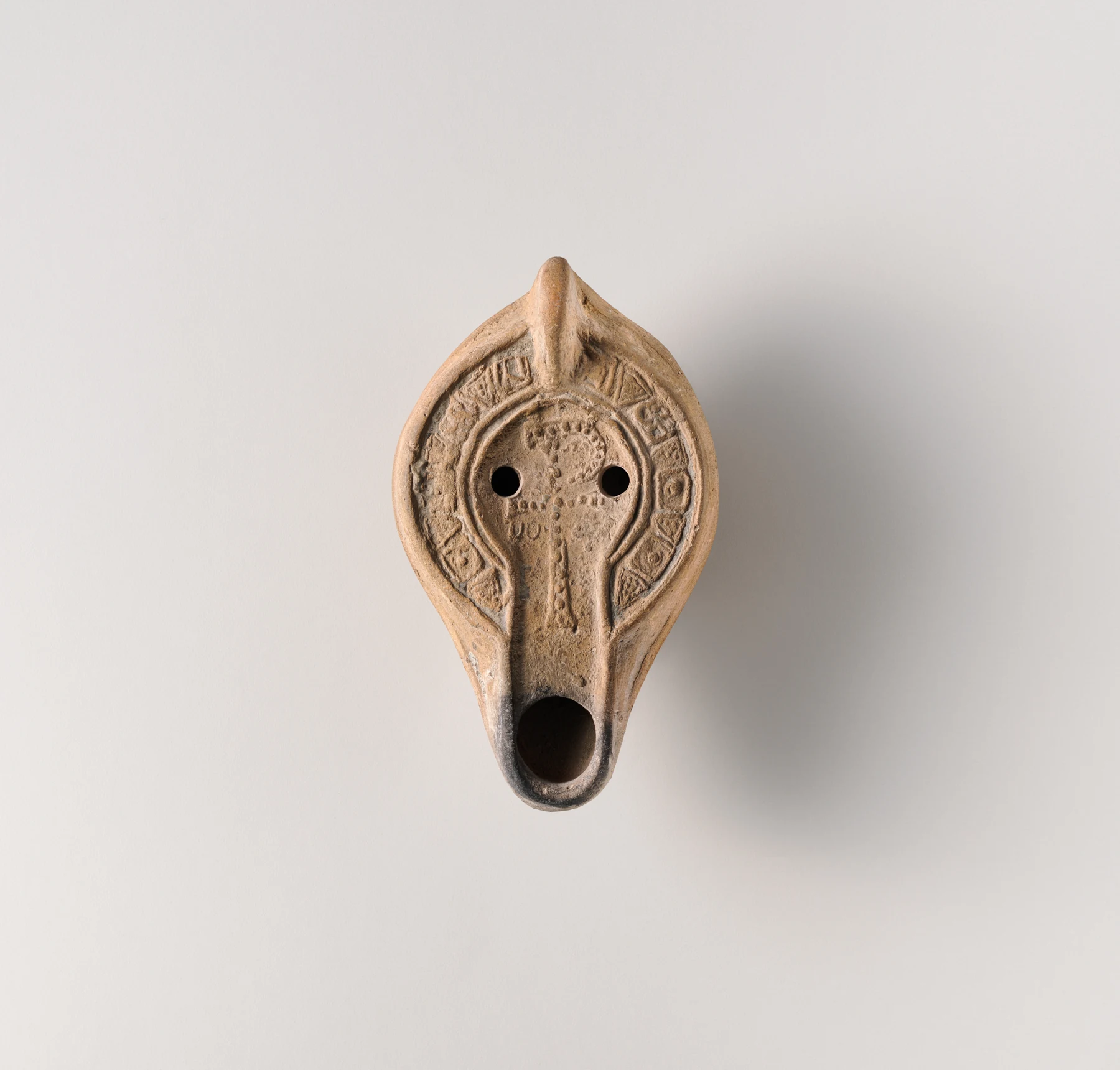
A small lamp with a Christian mark
A fifth-century terracotta lamp brings Christian imagery into an object made to be filled, handled and lit.
Archive
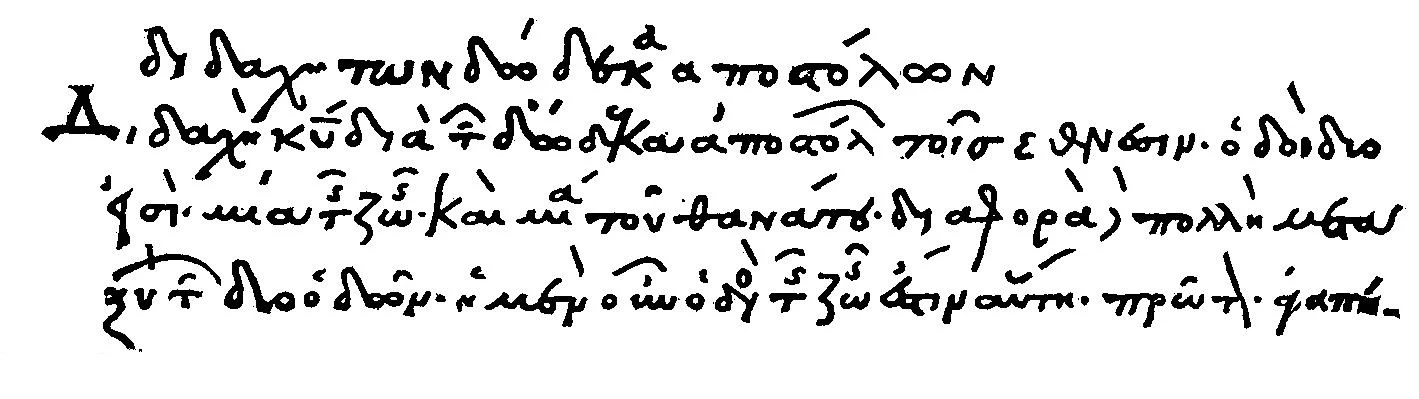
The Didache begins with a road
An early Christian teaching text opens with a choice of ways, then turns to the ordinary business of living together.