Essays · From the Editors
What the margins ask of a reader
Why Word & Vellum begins with attention: to a text, to its readers across centuries, and to the difference between evidence and interpretation.
Nehemiah 8:1–12 · Luke 24:13–35
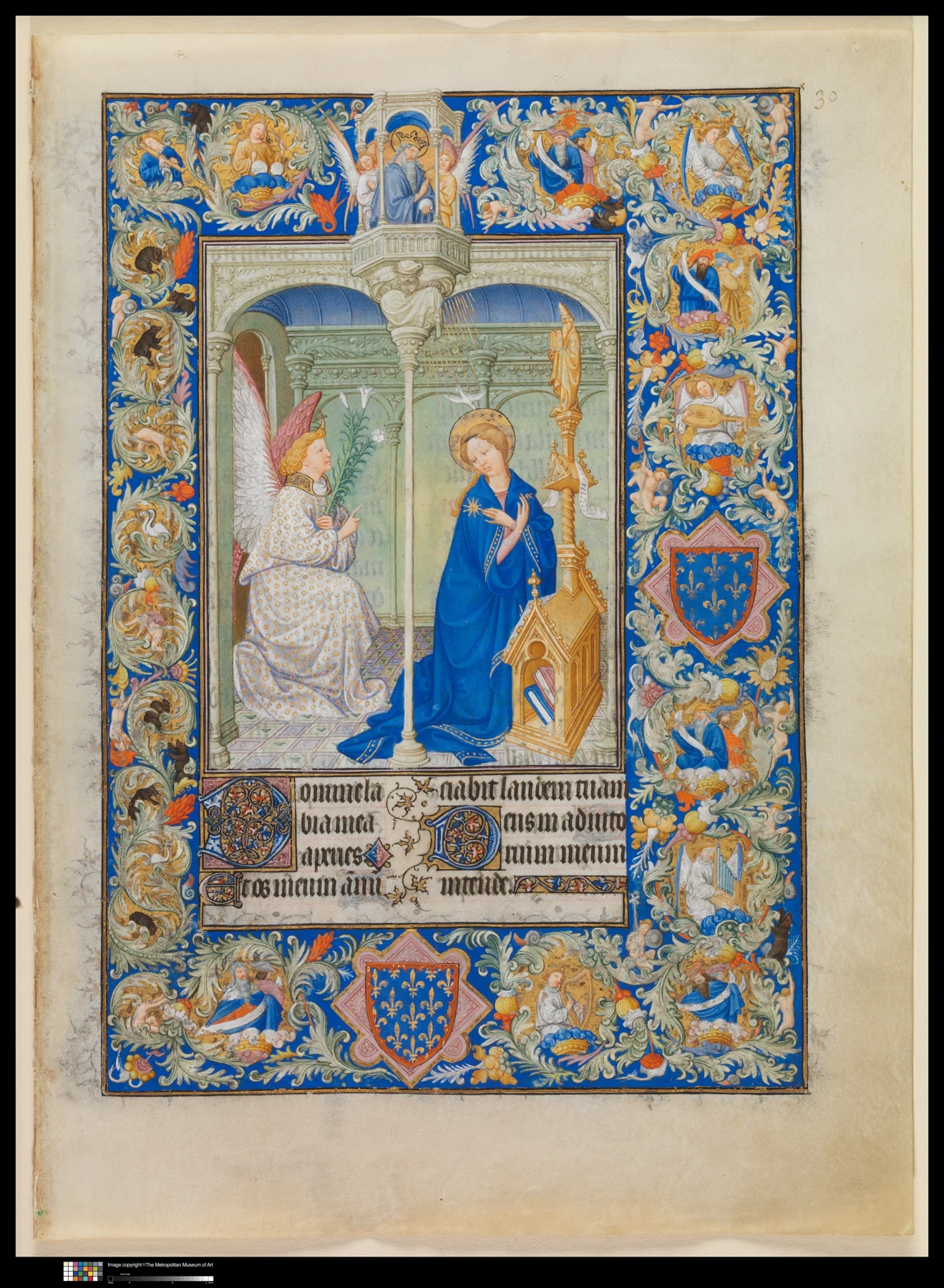
A reader notices the same object twice. A word looks unfamiliar. Someone in a story is named, while a more powerful person is not. Before there is an essay, there is often a small interruption of this kind: the page has made reading slow down.
Word & Vellum begins there. We are interested in Scripture and in the works people have made while reading it: poems, paintings, commentaries, hymns, manuscripts and stories. Their differences matter. An engraving does something a sermon cannot. A translation exposes choices that a familiar sentence can conceal.
Our daily Marginalia will take one detail at a time. Longer essays will make room for the questions a short observation opens. The journal will gather sustained explorations around a biblical theme. These are different lengths of attention, joined by a common obligation to the text.
Reading has company
Scripture itself gives us scenes of reading with other people. In Nehemiah 8, the law is read before an assembled community and explanation accompanies the reading. In Luke 24, the encounter on the road includes an interpretation of Scripture that the travellers later remember.
Neither scene supplies a complete programme for a literary publication. Both help explain why interpretation belongs within an account of reading. Words are heard, discussed, connected and returned to. The reader is not always alone with a page.
The company we want to keep extends across languages and centuries. That requires more than occasionally adding an unfamiliar name to an otherwise settled reading list. The questions have to change as new works enter. A Syriac hymn, an Ethiopian manuscript or an English poem deserves the time needed to understand its own particular form and setting.
The evidence should remain visible
A journal can make a reader curious without pretending that every question has been resolved. When the text names a person, we can say so. When later readers have supplied an identity, we should explain that difference. When a proposed connection is our own interpretation, it should be presented as one.
This is why source notes belong with the writing. They give the reader somewhere to go. A good reference can be an invitation to disagree, to check an assertion or to discover that the surrounding passage changes its meaning.
We will also identify the translations and collections we use. A historical work and its modern translation are different objects. An old painting and the photograph through which it reaches us have different histories. Accuracy includes noticing the hands between the original work and the present reader.
Room for questions
Christian reading need not hurry past difficult passages. A book that contains Job can make room for protest. A tradition that has produced so many forms of art can be approached with more than one kind of attention.
We want our pages to make that room. Sometimes an essay will follow a passage through several works. Sometimes it will stay with one paragraph. Some observations will be modest enough to fit beside a reader’s own pencil mark.
The measure of success is not how much material can be placed on a screen. It is whether a reader leaves with a better question, a text worth opening or a detail that will remain visible the next time they encounter it.
There are centuries of work to read. We can begin with a page.
Passages mentioned
Read in company
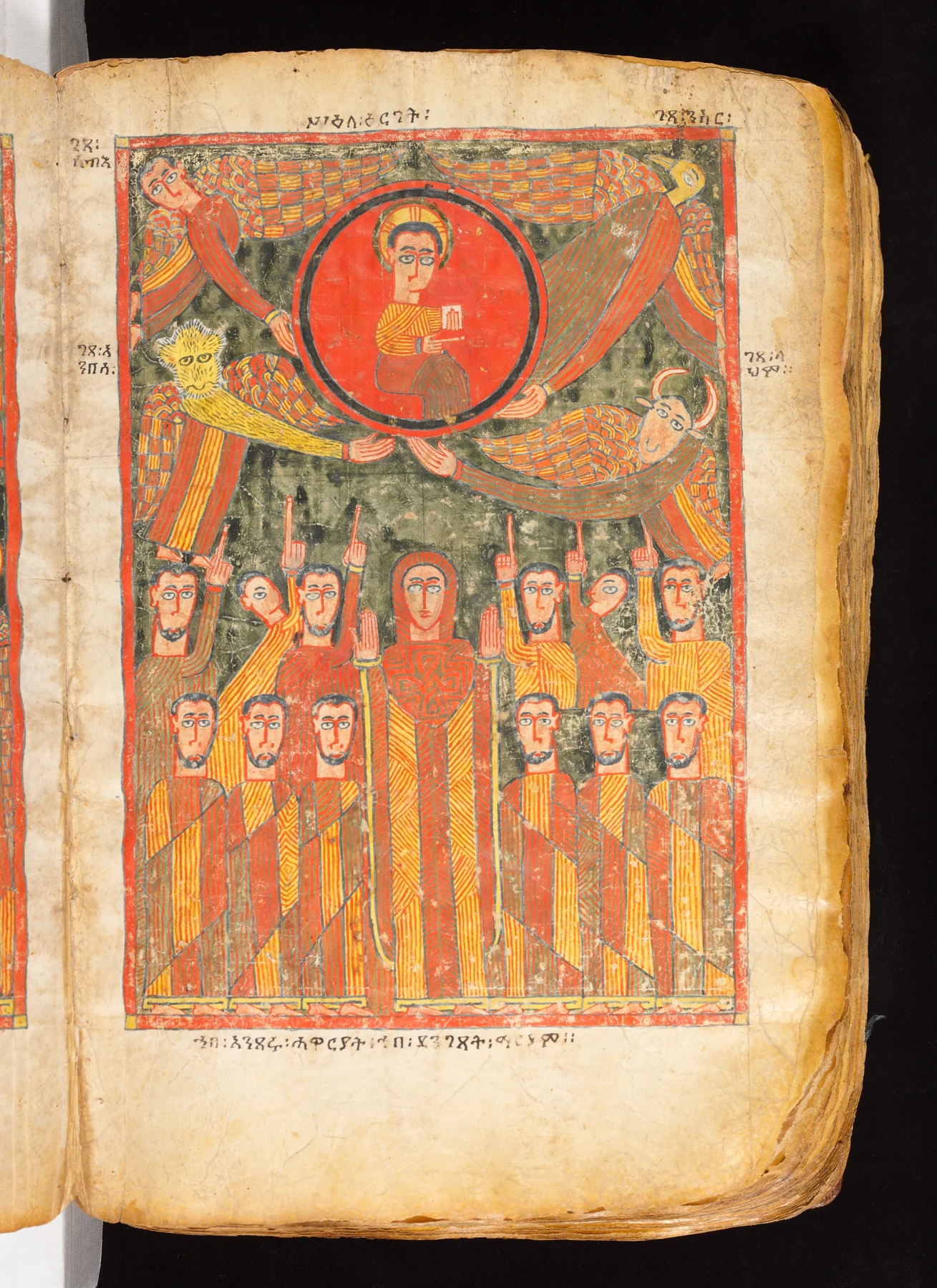
Many Tongues
A Gospel book from the Ethiopian Highlands
An Ascension image asks to be read as part of a manuscript, a local artistic tradition and a community’s worship.
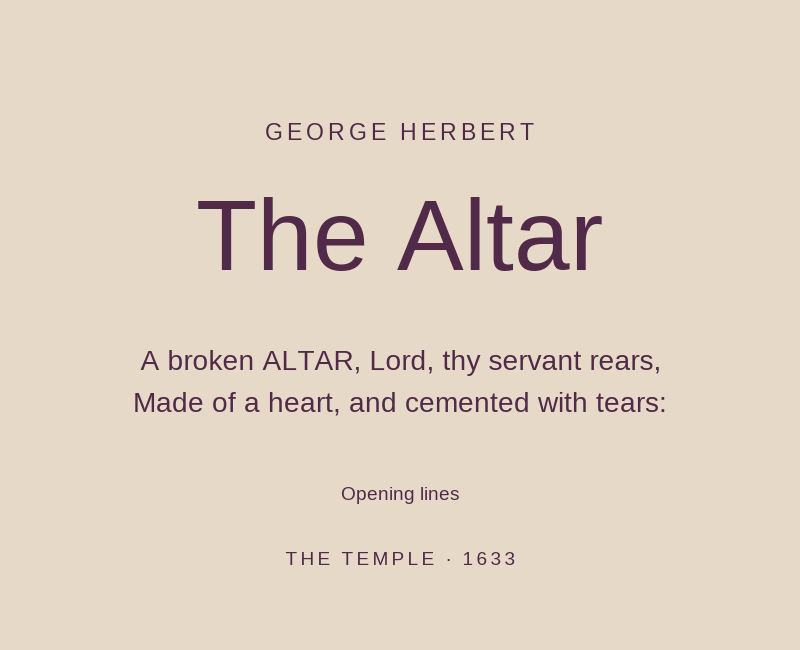
Literature
George Herbert builds an altar
A poem’s shape can be part of its thought. Reading the stone, heart and sacrifice of Herbert’s ‘The Altar’.