Scripture · The Word
Job’s friends sat down first
Before the arguments, there were seven days on the ground. Reading the first act of friendship in the Book of Job.
Job 2:11–13 · Job 4:1–8 · Job 42:7–9
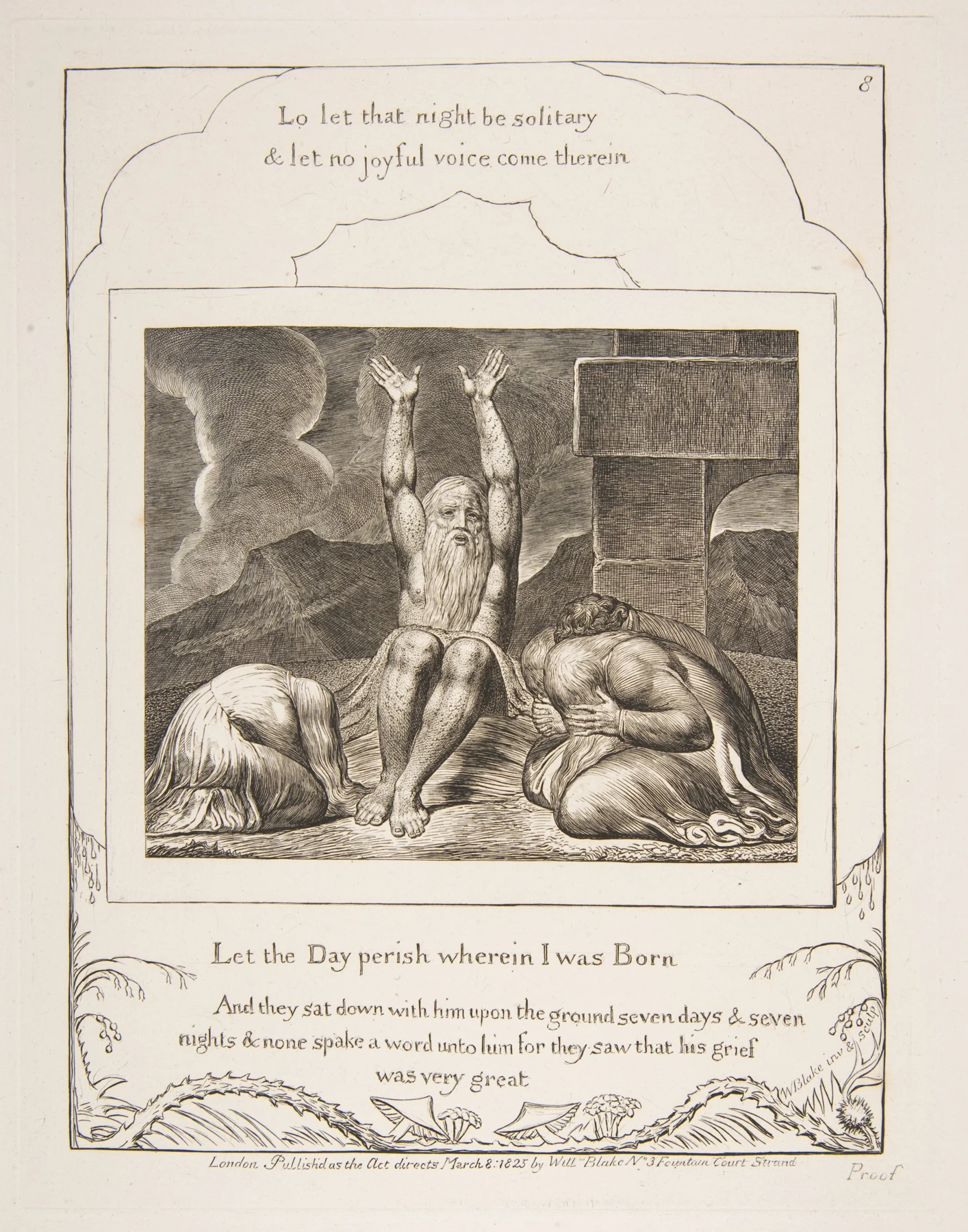
For seven days, Job’s friends do something that their later speeches can make us forget. They sit beside him on the ground. None of them speaks a word to him.
They have travelled to comfort him. At a distance, they do not recognise the man they came to see. They weep, tear their robes and throw dust over their heads. Only then do they sit. The narrator gives a reason for the silence: they can see the extent of his suffering. Job 2:11–13 records an act of attention before it records an argument.
That order matters. Eliphaz, Bildad and Zophar enter the book as friends who have made a journey. A reading that turns them immediately into stock villains loses the force of what follows. Their failure is more troubling because they began so well.
When explanation arrives
Eliphaz’s first response in chapter 4 remembers Job as someone who supported other people. He knows that Job’s words once helped the weak. But his speech moves towards a question about whether innocent people perish. The experience of the man in front of him is being fitted to an account of how the world ought to work.
The shift is small enough to be recognisable. A companion becomes an interpreter of another person’s pain. Reassurance starts requiring the sufferer to accept an explanation. The more firmly that explanation is defended, the less room remains for the person who cannot live inside it.
We need not decide that every sentence the friends utter is false. The book makes a harder demand on its reader. A statement can sound religiously assured and still be wrongly addressed. Its place in a conversation, its assumptions about the listener and the use to which it is put all matter.
This is one reason to read Job as a work with speakers, scenes and developing relationships. A sentence lifted from a speech may sound like a straightforward biblical teaching. Return it to the speaker and the argument, and its function can change. The book contains disputed claims, accusations, protests and answers. Reading them as interchangeable sayings erases the drama.
The friends hear a verdict
At the end, God addresses Eliphaz, rebuking him and his two companions. In Job 42:7–9, they are corrected for their speech about God and told that Job will pray for them. The person they attempted to instruct becomes their intercessor.
The reversal makes the opening scene worth visiting again. The friends’ arrival had involved a willingness to share Job’s position, down on the ground. Their speeches gradually moved them into a position of judgement. The ending requires another movement towards him.
This is a literary reading of the sequence, rather than a claim that silence is always the right response to suffering. Job himself needs to speak. Much of the book exists because his grief refuses to remain unspoken. The contrast is between making room for that speech and trying to settle its meaning in advance.
For readers, the seven days are also an instruction in pace. Before we rush to the celebrated whirlwind, the restoration or a theory of suffering, the book leaves three visitors sitting with someone they initially failed to recognise. It allows that sight to occupy the page.
The arguments will come. First, the friends have to see him.
Read alongside
- Job 2: the visitors arrive.
- Job 4: Eliphaz begins to speak.
- Job 42: the friends receive their answer.
Scripture links use the King James Version. The discussion above is an editorial interpretation of the narrative.
Read in company
Sacred Art
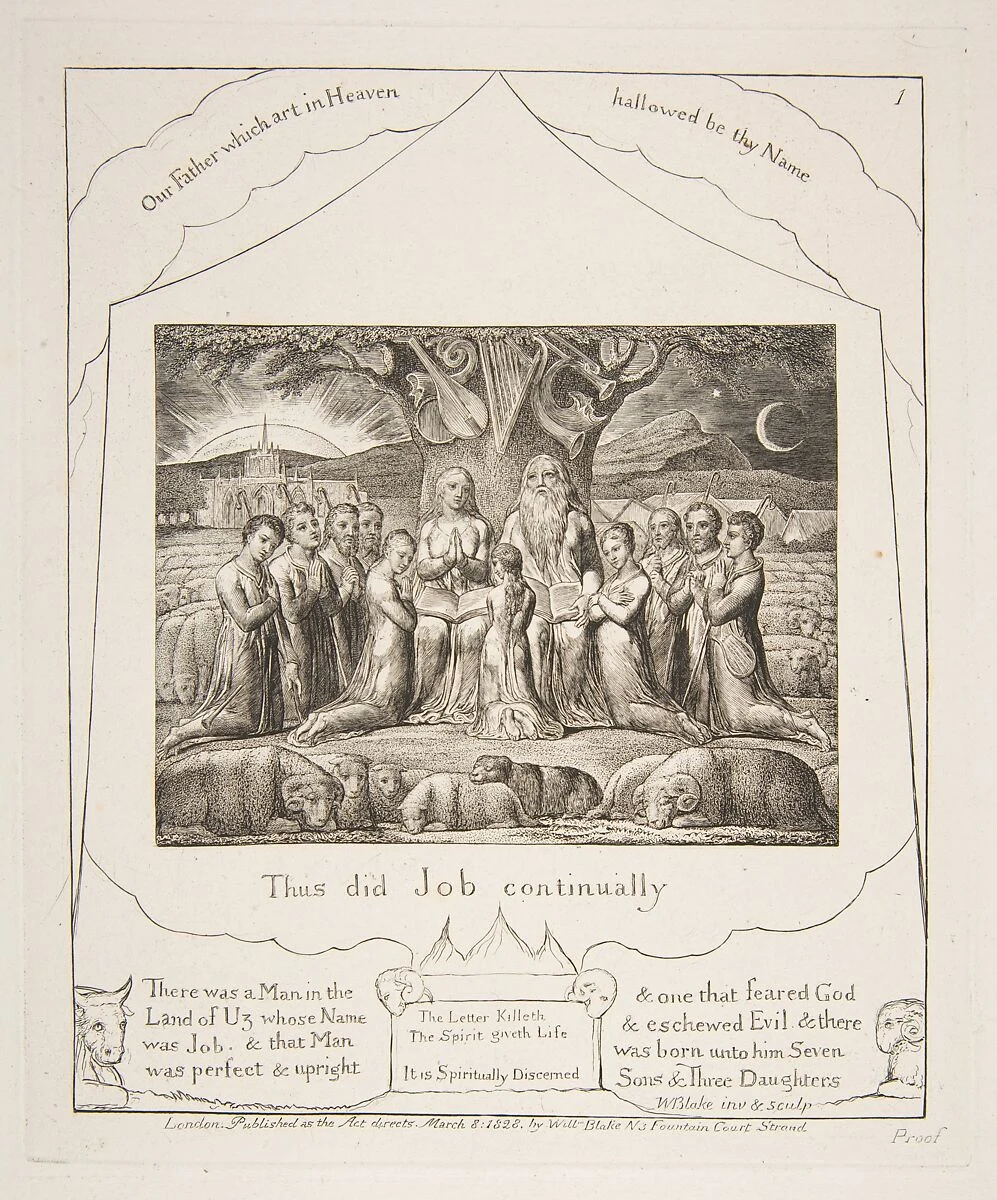
Blake’s Job, before and after
In the first image, the instruments hang in a tree. In the last, the family plays them. A small change opens a way into Blake’s biblical imagination.